
Coeur d’Alene Is Changing: What’s Actually Being Planned and What It Could Mean for the Future of CDA
Coeur d’Alene Is Changing: What’s Actually Being Planned and What It Could Mean for the Future of CDA
If you’ve lived in Coeur d’Alene for any amount of time, you’ve probably noticed that things are changing.
New homes are going up. New businesses are opening. Downtown looks different than it did just a few years ago. There are cranes on the skyline, more traffic on some of our roads, and plenty of conversations about what Coeur d’Alene should look like 5, 10, or even 20 years from now.
And if you’re anything like me, you may have wondered:
What is Coeur d’Alene actually planning for the future?
I wanted to dig into that question because there is a lot of information floating around about growth in North Idaho, and it can be difficult to separate what’s actually planned from what’s simply being talked about.
So I spent some time looking through the City’s planning documents, the Kootenai County planning process, the Coeur d’Alene Regional Chamber’s priorities, and some of the development activity happening around town.
Here’s what I found.
Coeur d’Alene Already Has a Long-Term Plan
The foundation for the City’s future growth is its 2022–2042 Comprehensive Plan.
This isn’t a list of individual construction projects. Instead, it’s the City’s long-range roadmap for how Coeur d’Alene wants to grow and develop over the next two decades.
The plan looks at things like land use, transportation, housing, economic development, parks, natural resources and the overall character of the community.
Interestingly, the City identified transportation and the local economy as two high-priority areas when developing the plan.
That makes a lot of sense when you look around Coeur d’Alene today.
Growth isn’t just about how many houses we build. It’s about whether our roads, utilities, schools, businesses, emergency services and other infrastructure can keep up with that growth.
And that’s where things get interesting.
Downtown Coeur d’Alene Is Getting a Closer Look
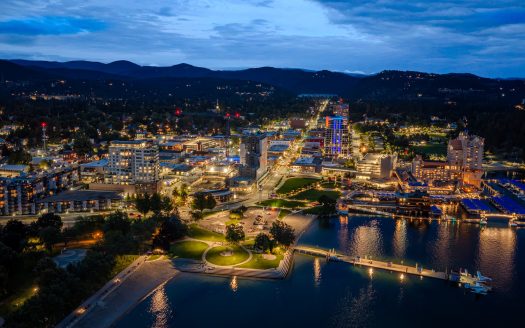
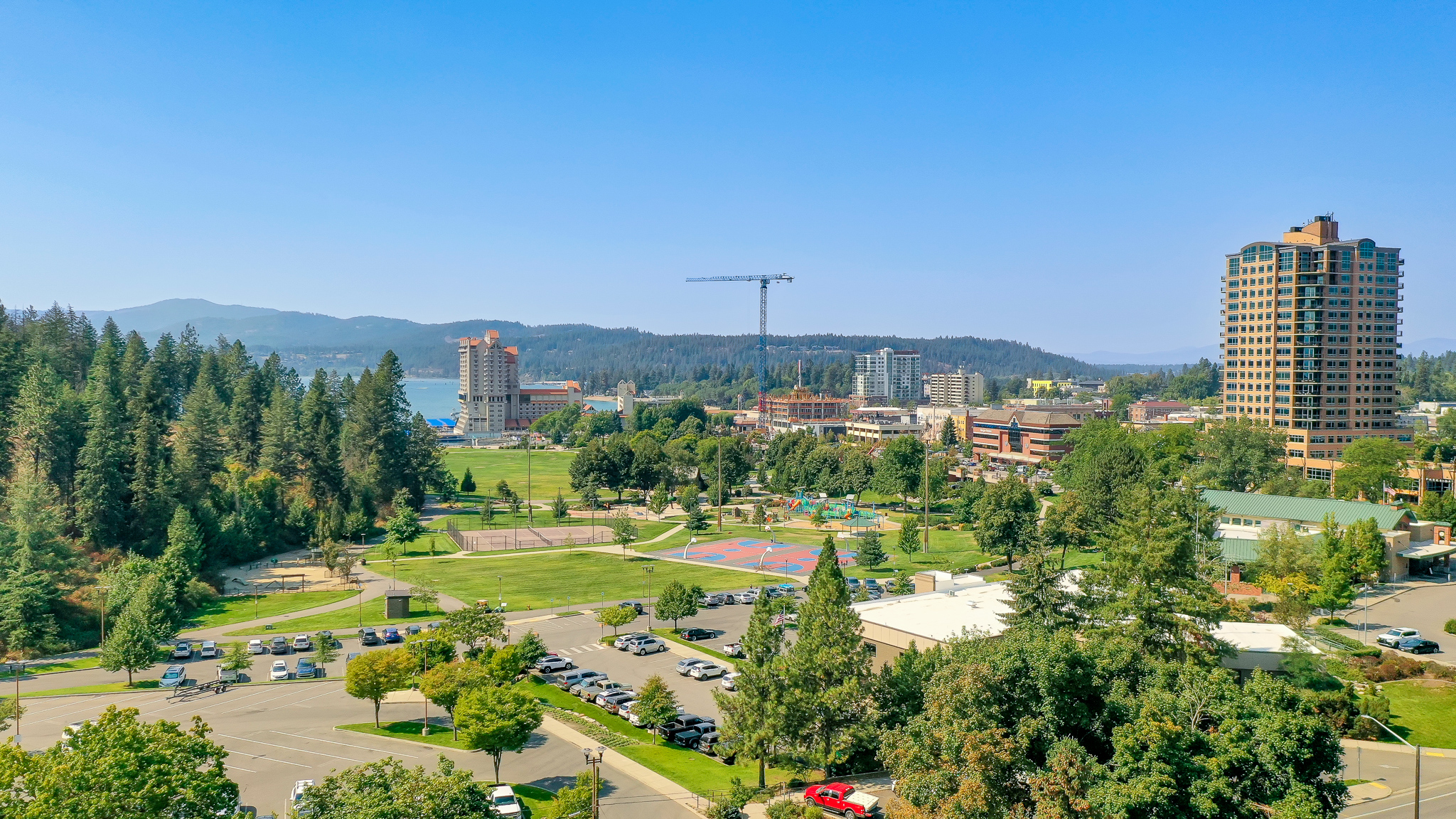
One of the biggest conversations happening right now involves Downtown Coeur d’Alene.
If you’ve driven through downtown lately, you’ve probably noticed the construction.
The Thomas George condominium tower, the new Marriott hotel and the Sherman Tower are all part of an unprecedented period of development activity in the downtown core.
That has raised an important question:
How do we continue to grow without losing what makes Downtown Coeur d’Alene special?
That’s exactly what the City’s Downtown Core Working Group has been studying.
The group was created to look at the City’s existing downtown development regulations and design guidelines, including building heights, tower spacing, historic preservation, pedestrian-friendly design, parking, loading areas, lighting and public view corridors.
And this isn’t just about whether someone likes tall buildings or doesn’t like tall buildings.
There are legitimate arguments on both sides.
More density downtown can mean more housing, more customers for local businesses and more efficient use of existing infrastructure.
At the same time, Coeur d’Alene’s downtown has something that is difficult to recreate once it’s gone: its historic character, walkability and connection to the lake.
The Working Group’s preliminary recommendations have included reducing potential tower heights in portions of downtown, increasing the spacing between taller buildings and not allowing additional 220-foot towers under the current framework.
But here’s an important distinction: these are recommendations being studied—not changes that I would tell a buyer are already law.
The City is still working through additional analysis, stakeholder input and potential changes to the regulations.
That’s something worth watching.
Growth Isn’t Just Happening Downtown
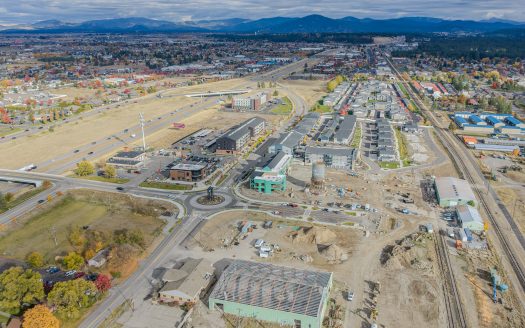
While downtown gets most of the attention, some of the biggest changes are happening outside the traditional city center.
One example is Coeur Terre, including the Coeur Terre 2 development.
Projects like this are a good reminder that Coeur d’Alene’s growth story isn’t just about luxury condos and downtown hotels.
It’s also about where families will live.
Where schools will be built.
Where parks and trails will go.
How wastewater and water infrastructure will keep up.
And, perhaps most importantly for many people, how everyone is going to get around.
The City has already had to address wastewater infrastructure timing and other issues related to the larger Coeur Terre development.
And Coeur Terre 2 has also generated public discussion about traffic and the impacts of additional growth.
That’s a conversation we’re going to continue hearing throughout North Idaho.
Kootenai County Is Planning for the Next 20 Years Too
There’s another piece of this story that I think is easy to overlook.
While the City of Coeur d’Alene has its own comprehensive plan, Kootenai County is currently updating its long-range Comprehensive Plan as well.
The County says the new plan is intended to guide growth, recreation, land use, infrastructure and quality of life over the next 20 years.
At the same time, the County is developing its first-ever Parks & Waterways Plan.
The County’s current timeline has the comprehensive-plan process extending into 2027.
Why does this matter to someone who lives in Coeur d’Alene?
Because our community doesn’t stop at the city limits.
People live in Coeur d’Alene, Post Falls, Hayden, Rathdrum and the surrounding unincorporated areas while working, shopping, going to school and enjoying recreation throughout the region.
The decisions being made by the City and County will affect one another.
That’s why I think it’s important to look at North Idaho’s growth as a regional issue rather than treating each city like it’s operating on its own island.
The Chamber’s Perspective: Growth Needs Infrastructure
I also wanted to see what the Coeur d’Alene Regional Chamber is saying about the future of our area.
The Chamber describes itself as a voice for local businesses and an advocate for a strong business climate.
Its recent advocacy work has focused on several issues that overlap directly with the growth conversation we’re having here in North Idaho.
Those include:
Infrastructure
Workforce housing
Regulatory reform
Education and workforce development
Public safety
Healthcare access
Economic development
The Chamber’s message is pretty straightforward: growth creates opportunities, but it also creates responsibilities.
That’s something I think most people can agree on.
Businesses need employees who can afford to live here.
Employees need roads that work.
Families need housing.
Businesses need reliable infrastructure.
And communities need to make sure growth doesn’t outpace the services that residents depend on.
What Does All of This Mean for Homeowners?
This is probably the part I find most interesting as a Realtor.
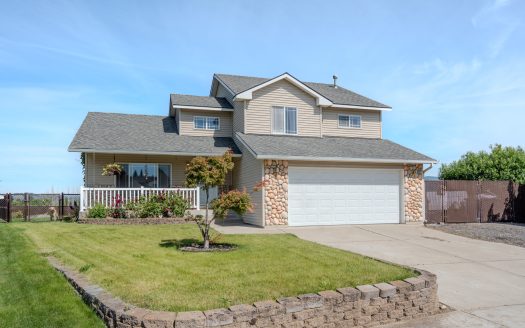
When you’re buying a home, you’re not just buying the four walls around you.
You’re buying into a neighborhood.
You’re buying proximity to roads, schools, parks, businesses, trails and other amenities.
You’re also buying into whatever that area may look like 5 or 10 years from now.
That’s why I always encourage buyers to look beyond the listing.
If you’re considering purchasing a home, especially in an area experiencing rapid growth, I’d want to know:
What is currently zoned around the property?
What does the City’s future land-use map show?
Are there large undeveloped parcels nearby?
Are there transportation projects planned in the area?
Are there subdivision applications or development proposals nearby?
And perhaps most importantly:
What could reasonably change around this property in the future?
That doesn’t mean every undeveloped piece of land is going to become an apartment complex.
It doesn’t mean every proposed project will be approved.
And it definitely doesn’t mean you should be afraid of growth.
It simply means that doing your homework matters.
So, Is Coeur d’Alene Going to Look Completely Different?
Honestly, I don’t think anyone can answer that question with certainty.
And I don’t think we should pretend that we can.
Some projects will happen.
Some won’t.
Some proposals will change significantly before they ever get built.
Some parts of town will become more dense while other neighborhoods may remain much closer to the character they have today.
What we do know is that Coeur d’Alene is planning for growth.
The City has a 20-year comprehensive plan.
The Downtown Core is being reevaluated.
Kootenai County is working on its own 20-year plan.
The business community is actively talking about infrastructure, housing and economic development.
And developers are continuing to bring new projects forward.
So the question probably isn’t whether Coeur d’Alene will change.
It will.
The bigger question is how we manage that change.
My Take
Personally, I think growth can be a good thing.
I’ve seen what Coeur d’Alene has become over the years, and there are a lot of things worth protecting.
Our lake.
Our downtown.
Our neighborhoods.
Our trails.
Our parks.
Our small-business community.
And, maybe most importantly, the sense of community that makes people want to call this place home in the first place.
At the same time, I don’t think we can expect Coeur d’Alene to stay exactly the way it was 20 or 30 years ago.
People are moving here.
Businesses are investing here.
Families need places to live.
And our community has to figure out how to accommodate that growth while protecting the things that made people fall in love with Coeur d’Alene in the first place.
That’s a difficult balance.
But I think it’s an important conversation—and one that all of us who live here should be paying attention to.
Thinking About Buying or Selling in Coeur d’Alene?
If you’re considering buying a home in Coeur d’Alene, I don’t think the conversation should stop at “What does this house look like today?”
I’d also want to help you understand what’s happening around it and what could potentially change in the future.
If you’d like to talk about a particular neighborhood, property or area of Coeur d’Alene, I’m always happy to help you take a closer look.
After all, you’re not just buying a house.
You’re buying a piece of Coeur d’Alene.