
Post Falls Is Changing — The New Development and Zoning Plan for the City and Home Buyers
Watching homes in Post Falls, Idaho, lately, you’ve probably noticed the massive plan the city is implementing.
Post Falls is changing. And I mean really changing.
New homes are going up. Roads are being planned and improved. Downtown is starting to look different. Businesses are moving in. Old properties are being redeveloped. And the City of Post Falls is working on a new long-term plan that could help shape what the community looks like for decades to come.
So, if you’re thinking about buying a home in Post Falls, I think there’s a bigger question you should be asking than just:
“What house can I afford?”
You should also be asking:
“What is this part of Post Falls going to look like five, ten, or twenty years from now?”
That’s a big deal.
Because when you’re buying a home, you’re not just buying the house. You’re buying the neighborhood, the roads, the schools, the surrounding businesses, the parks, the traffic patterns, and, whether you realize it or not, the future development around you.
And right now, there is a lot happening in Post Falls.
Post Falls Is Planning for the Future
One of the biggest things happening in Post Falls is the city’s comprehensive planning process.
The City of Post Falls is updating its long-term vision for the community. This includes housing, land use, transportation, economic development, infrastructure, and quality of life.
And this isn’t just some document that sits on a shelf.
The comprehensive plan is closely connected to zoning and development regulations. In other words, the decisions being made now can influence what gets built, where it gets built, and how Post Falls grows over the coming decades.
That matters if you’re buying a home here.
Maybe not tomorrow. Maybe not next year.
But if you’re buying a home you plan to own for ten or fifteen years, I think it’s absolutely worth understanding what’s happening around you.
You can learn more about the city’s planning process through the official Post Falls planning website.
Is Post Falls Changing Its Zoning?
Yes, but there’s a little more to the story.
I wouldn’t describe it as one giant new zoning law that suddenly changes everything in Post Falls.
Instead, the city is working through a combination of comprehensive plan updates, zoning-code changes, and individual zoning applications.
The goal is to better connect the city’s long-term vision with the actual rules developers have to follow.
This work includes things like residential density, mixed-use development, commercial areas, and how different types of development fit together.
We’ve already seen individual properties go through zoning changes.
For example, some downtown properties have been considered for zoning that allows for a more compact, pedestrian-friendly environment with a mixture of residential, commercial, office, and civic uses.
And that’s important because it tells us something.
Post Falls isn’t simply building more houses.
It’s working toward building more of a community.
For anyone researching Post Falls real estate, understanding zoning can help you make a more informed decision about where to buy. A quiet property today could be near a new commercial development or a higher-density residential project in the future.
That doesn’t mean every neighborhood will change dramatically. It simply means it’s worth understanding what’s permitted around a property before you buy.
Millworx Is a Great Example of Where Post Falls Is Headed
If you’ve driven through downtown Post Falls recently, you’ve probably noticed Millworx.
And if you haven’t, it’s worth checking out.
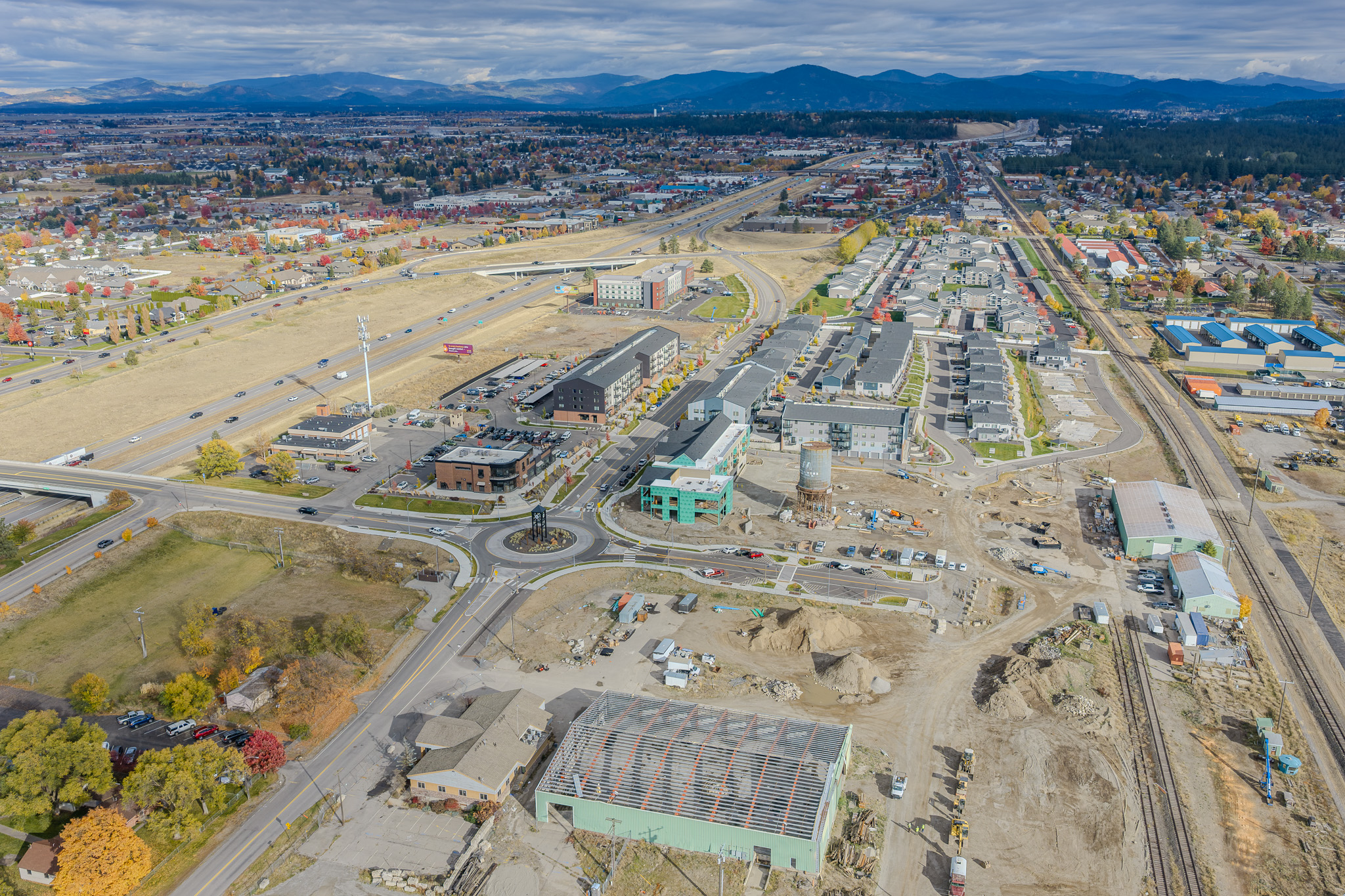
The former Idaho Veneer mill site is being transformed into a large mixed-use development with housing, businesses, restaurants, and other amenities.
The project has been described as a new urban center for Post Falls, with hundreds of residential units and substantial commercial space. It’s also located near the Spokane River, parks, and the Centennial Trail.
Additional mixed-use buildings and new dining and retail concepts are part of the development’s continued growth.
That’s a pretty big change from the Post Falls many of us remember.
And personally, I think this is one of the most interesting things happening in Post Falls right now.
We’re starting to see more places where people can live, work, eat, and spend time without having to leave town.
That’s a big deal for a community that has historically been thought of as more of a bedroom community between Spokane and Coeur d’Alene.
For home buyers, developments like Millworx are worth watching because they can change how people experience a neighborhood. New restaurants, shops, housing options, and gathering spaces can make certain areas more convenient and appealing.
Of course, whether those changes are a positive for you depends on your lifestyle.
Some buyers love being close to restaurants and activity. Others would rather have more space, less traffic, and a quieter neighborhood.
Neither preference is wrong. The important thing is knowing what you’re buying into.
What About the Spokane River?
This is where things get especially interesting if you’re looking at homes near the Spokane River.
The river has always been one of Post Falls’ biggest assets.
But now you’re seeing development, transportation planning, trails, businesses, and housing all becoming part of the bigger conversation about how Post Falls grows.
And I think this is something buyers should pay attention to.
Not because every house near the river is suddenly going to become worth a fortune.
That’s not how real estate works.
But because location matters, and long-term investment in an area can affect how desirable a neighborhood becomes.
One of the things I always tell buyers is to look beyond the four walls of the house.
Look at what’s around it.
Look at what’s being planned.
Look at the roads.
Look at the surrounding zoning.
Look at vacant land.
Look at nearby commercial development.
Look at parks and trails.
And ask yourself:
“If I still own this house ten years from now, what will this area look like?”
That’s a much better question than simply looking at today’s listing photos.
Opportunity Zones Could Bring More Investment to Post Falls
Another development worth watching is Post Falls’ inclusion in Idaho’s new Opportunity Zone designation.
Opportunity Zones are designed to encourage private investment through federal tax incentives for eligible investments.
For Post Falls, this could be another factor in the area’s broader development story, alongside new housing, infrastructure improvements, and commercial projects.
Now, before somebody reads that and thinks, “Well, my house is automatically going up in value because of this,” that’s obviously not what I’m saying.
There are a lot of factors involved.
Opportunity Zone incentives do not guarantee that a neighborhood will improve, that a particular property will increase in value, or that every project will move forward as expected.
But when you combine potential investment incentives with new housing, commercial development, infrastructure planning, and a city that’s actively thinking about future growth, it’s something worth watching.
Especially if you’re buying property as a long-term investment.
The key is to evaluate the individual property and its surroundings rather than assuming that a designation alone makes it a good investment.
More New Construction Is Coming to Post Falls
This is another major piece of the Post Falls real estate story.
New construction continues to be an important part of the area’s growth, with residential developments throughout the community.
Some examples include Crown Reserve, Foxtail, Montrose, North Place, and other projects.
Crown Reserve is one example of a large residential development being pursued in Post Falls. Other projects have moved through the city’s planning process with plans for residential lots, different zoning classifications, and construction phased over time.
That’s a lot of new housing.
And here’s where I think buyers need to be smart.
More houses don’t automatically mean your house is worth less.
It depends on what is being built, where it’s being built, what it costs, how much land is available, what amenities are included, and what buyers can get for their money.
A brand-new 1,300-square-foot house on a small lot is not necessarily competing with a 2,000-square-foot established home on a larger lot with mature landscaping.
Likewise, a new construction home with modern finishes and energy-efficient features may appeal to a different buyer than an older home in an established neighborhood.
When comparing Post Falls homes for sale, it’s important to consider the complete package.
Think about the lot size, floor plan, location, condition, neighborhood amenities, commute, and potential future development.
That’s why simply looking at the number of new homes being built doesn’t tell you the whole story.
Roads and Transportation Are Changing Too
Here’s another thing that often gets overlooked when people are shopping for a house.
Roads matter.
Post Falls has been working on long-range transportation planning to address how people move around the community as it grows.
Planning efforts include major corridors such as Pleasant View Road, McGuire Road, Chase Road, Spokane Street, Idaho Street, and Greensferry Road, along with bicycle connections and other transportation options.
Now, I’ll be honest.
Nobody gets excited about a massive transportation plan when they’re looking at houses.
I get it.
But if you’re buying a home that you’re planning to own for a long time, these things matter.
A new road connection can make an area easier to get around.
A new commercial corridor can make a neighborhood more convenient.
A new trail connection can change how people use an area.
And sometimes development can create more traffic.
That’s why I think buyers should understand both sides of the equation.
Development can bring opportunities.
It can also bring changes you may not expect.
Before buying a home in Post Falls, consider how you currently travel to work, school, shopping, and other places you visit regularly. Then look into planned transportation improvements that could affect those routes.
It’s also worth visiting a neighborhood at different times of day to get a better feel for traffic and noise.
A neighborhood that feels peaceful on a weekend afternoon might feel very different during the morning commute.
What Does All This Mean If You’re Buying a Home in Post Falls?
This is probably the most important part.
I don’t think the answer is “buy now before it’s too late.”
I don’t think the answer is “Post Falls is going to explode.”
And I definitely don’t think anybody can honestly promise you what your house will be worth ten years from now.
Nobody knows that.
What I do think is this:
If you’re buying in Post Falls, you should be looking at more than the house.
Before you make an offer, I’d want to know:
What is the zoning around the property?
Is there vacant land nearby?
What is that land zoned for?
Are there development applications nearby?
Are there major road projects planned?
Is new commercial development coming?
Are there new subdivisions planned?
How close are parks and trails?
What is happening around the Spokane River?
What does the city’s long-term plan say about the area?
How might future development affect traffic, privacy, noise, or convenience?
Does the neighborhood fit your needs today and your plans for the future?
And probably most importantly, what are you actually buying into?
Because there’s a difference between buying a house and buying a location.
A home can have a beautiful kitchen, updated bathrooms, and a great floor plan. But if the surrounding area doesn’t fit your lifestyle, you may not be as happy there as you expected.
On the other hand, a home that needs a few cosmetic updates might be in a neighborhood that offers exactly what you want for the long term.
The goal isn’t to predict every future change. It’s to understand the factors that could affect your experience as a homeowner.
How Future Development Could Affect the Post Falls Housing Market
When people talk about real estate development, one of the first questions is usually whether home values will go up or down.
It’s a fair question, but the answer isn’t as simple as you might think.
New development can bring additional housing options, businesses, restaurants, improved infrastructure, and amenities that make an area more attractive to some buyers.
At the same time, increased construction can bring more traffic, changes to neighborhood character, and additional competition among homes for sale.
The effect depends on the location, the type of development, the number of homes being built, local housing demand, and broader economic conditions.
For example, an established neighborhood near new shopping and dining options might become more convenient for residents. However, a property directly next to a busy commercial development might not appeal to someone looking for a quiet residential setting.
Similarly, new construction can give buyers more choices, but it doesn’t necessarily replace the appeal of an established home with a larger lot, mature trees, or a convenient location.
If you’re evaluating the Post Falls housing market, don’t rely on development headlines alone.
Look at comparable home sales, current inventory, property condition, neighborhood characteristics, and your own long-term plans.
And remember, real estate is highly local. Two homes just a short drive apart can perform differently depending on their individual characteristics and surroundings.
Questions to Ask Before Buying a Home in Post Falls
If you’re serious about buying a home in Post Falls, here are a few practical steps I’d recommend taking before you make an offer.
First, research the property’s zoning and nearby zoning classifications. This can help you understand what types of development may be permitted around the home.
Second, look for vacant land and properties that could potentially be redeveloped. Don’t assume an empty lot will remain empty simply because it has been vacant for a long time.
Third, check with the city about pending development applications and planned infrastructure improvements. Proposed projects can change, so it’s important to understand whether something is merely being discussed, formally proposed, approved, or already under construction.
Fourth, spend time in the neighborhood. Drive the surrounding streets, explore nearby parks and trails, and consider how the area feels during different parts of the day.
Finally, think about your own priorities.
Are you looking for a quiet residential neighborhood? Do you want to be close to restaurants and shopping? Would you prefer a newer home with modern features, or an established property with a larger yard?
Your answers can help you decide which parts of Post Falls make the most sense for you.
You don’t need to know exactly what the city will look like decades from now. But you should have a reasonable understanding of the direction your potential neighborhood may be heading.
Why I Think Post Falls Is Worth Watching
I’ve lived in North Idaho long enough to remember when Post Falls felt a whole lot different than it does today.
And now we’re watching the city evolve right in front of us.
There’s new construction.
There’s redevelopment.
There’s more housing.
There’s more business.
There’s more investment.
There’s transportation planning.
There’s a long-term comprehensive plan.
And there’s a lot of conversation about what Post Falls should look like in the future.
That doesn’t mean every change is going to be perfect.
It doesn’t mean every neighborhood is going to change.
And it definitely doesn’t mean every property is automatically going to increase in value.
But it does mean that if you’re thinking about buying a home in Post Falls, it’s worth paying attention.
Because the house you buy today could be sitting in a very different neighborhood ten years from now.
And personally, I think that’s one of the most important things buyers should be thinking about.
Not just:
“Can I afford this house?”
But:
“Do I want to own this house in this location as Post Falls continues to grow?”
That’s the kind of question I would want answered before I bought a home.
Thinking About Buying a Home in Post Falls?
If you’re considering a move to Post Falls, I’d encourage you to look beyond listing photos and square footage.
Take the time to understand the neighborhood, explore the surrounding area, and research what’s happening nearby.
Whether you’re looking at new construction, an established neighborhood, a property near the Spokane River, or a home close to downtown and Millworx, understanding the surrounding area can help you make a more informed decision.
And if you want to know what’s actually happening around a specific property you’re considering, that’s something I can help you dig into.
We can look at nearby development, zoning, vacant land, and other factors that may influence how the area changes over time.
Because sometimes the most important information about a house isn’t actually inside the house.
It’s what’s happening around it.