
The Future of Coeur d’Alene: Major Developments That Could Transform North Idaho
Coeur d’Alene Is Growing — And There’s a Lot Happening Behind the Scenes
If you’ve spent much time in Coeur d’Alene, you’ve probably noticed that things are changing. New neighborhoods are taking shape, construction is expanding west of town, downtown continues to evolve, and conversations about roads, housing, and infrastructure are becoming increasingly important.
And honestly, some of the biggest changes aren’t necessarily the ones you notice while driving around town.
Coeur d’Alene has several major development projects and long-term plans that could influence how the city grows over the coming years. Some are already approved or underway, while others are still being discussed, planned, or evaluated.
For anyone considering moving to Coeur d’Alene, buying a home in North Idaho, or investing in local real estate, these projects are worth understanding.
They could affect everything from where new homes are built to traffic patterns, neighborhood growth, waterfront access, and future property values.
Let’s take a closer look at what’s happening.
Coeur Terre: One of the Biggest Residential Developments in Coeur d’Alene
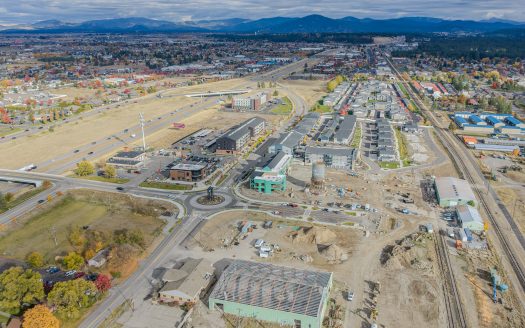
One of the most significant developments to watch is Coeur Terre, a large master-planned community on the western side of Coeur d’Alene.
This is not simply another small subdivision. The broader development covers hundreds of acres and is planned to include a combination of residential neighborhoods, multifamily housing, commercial areas, parks, trails, and future school sites.
The long-term vision is to create a much larger neighborhood rather than simply adding individual housing developments.
One of the most notable parts of the project is Coeur Terre 2. This phase received City Council approval following a lengthy public hearing and review process. The approved preliminary plat includes hundreds of proposed residential lots, multifamily areas, a park, a school site, and trails.
The project has also generated plenty of discussion among nearby residents, particularly regarding traffic, road connections, pedestrian safety, and the impact of additional housing on surrounding neighborhoods.
Those concerns are worth paying attention to. Adding hundreds of homes also means adding more people, vehicles, and demand for public services.
For buyers, however, the larger takeaway is that the west side of Coeur d’Alene is expected to become a major area of residential growth.
As additional phases move forward, this part of town could look very different than it does today.
Source: Coeur d’Alene Press – Coeur Terre 2 Passes
Atlas Waterfront: Transforming a Former Industrial Site Into a Waterfront Neighborhood
Another major project is the Atlas Waterfront redevelopment.
If you aren’t familiar with the history, this area was once home to the Stimson Lumber mill. After the mill closed, the property remained largely undeveloped for years.
The City of Coeur d’Alene eventually acquired the property and partnered with ignite CDA to help transform the former industrial site into a new waterfront neighborhood.
Today, the Atlas Waterfront is becoming a mix of residential development, public spaces, and access to the Spokane River.
One particularly interesting part of the project is The Currents, a planned neighborhood on approximately 10 acres of the remaining Atlas property.
According to ignite CDA, the project is planned to include approximately 104 owner-occupied homes intended for households earning roughly 80% to 120% of the area median income.
The plan also preserves approximately 4,000 feet of public shoreline.
That last detail is important. Waterfront property is one of the area’s most valuable resources, and maintaining public access while creating new housing is a significant part of the project’s vision.
The Currents is intended to include a walkable mix of home styles, including single-family homes, cottages, twin homes, and townhomes.
This is an interesting example of how Coeur d’Alene is trying to address two needs at once: creating more housing opportunities and making better use of valuable land along the river.
Source: ignite CDA – The Currents at Atlas Waterfront
Downtown Coeur d’Alene: More Density and New Development
Downtown Coeur d’Alene has always been one of the city’s biggest attractions. The lake, restaurants, shops, parks, and walkable streets give the area a character that is difficult to duplicate.
But downtown is also facing some interesting changes.
New hotel and mixed-use projects have introduced taller buildings into the downtown landscape. Projects such as Sherman Tower and the Thomas George development are examples of the growing interest in adding more vertical development to the city center.
This brings up an important conversation: How much should downtown Coeur d’Alene change?
Some residents welcome additional housing, hotels, restaurants, and businesses. Others are concerned about building heights, parking, traffic, historic character, and protecting views of the lake and surrounding hills.
The city has also explored these issues through its Downtown Core Working Group, which has discussed development standards and the future character of downtown.
The bigger picture is that downtown is likely to continue evolving. The challenge will be finding a balance between accommodating growth and preserving the qualities that make this part of Coeur d’Alene special.
Source: City of Coeur d’Alene – Downtown Core Working Group
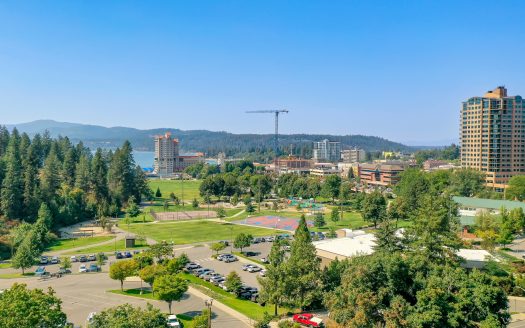
City Park Waterfront: Potential Improvements Along Lake Coeur d’Alene
When people think about Coeur d’Alene, the lake is usually one of the first things that comes to mind.
That’s why a recently proposed effort to improve the City Park waterfront is worth watching.
The concept focuses on the heavily used promenade area between Independence Point and Park Drive. The waterfront walkway is enjoyed by residents and visitors throughout the year, but parts of the infrastructure have aged.
Ideas being discussed include improving pedestrian circulation, replacing aging benches and furnishings, addressing damaged concrete, and restoring landscaping and trees.
At this point, it’s important to understand that these are proposed improvements, not a completed construction project. The effort involves developing recommendations, exploring funding, and determining what improvements may be feasible.
Still, this is an important conversation for the community.
City Park and its waterfront are among Coeur d’Alene’s most recognizable public spaces. Improvements here could make an already popular area more enjoyable for residents and visitors alike.
Source: Coeur d’Alene Press – Plan Surfaces for Cd’A Waterfront
Riverstone and the Spokane River Corridor
Riverstone has already become one of the more recognizable mixed-use areas in Coeur d’Alene.
With restaurants, residential properties, businesses, walking paths, and access to the Spokane River, it offers a different kind of living experience than some of the city’s more traditional neighborhoods.
The broader river corridor has also been a focus of redevelopment activity.
Projects and planning efforts in the area have involved residential development, mixed-use properties, public improvements, and infrastructure investments.
For buyers, Riverstone is worth watching because it demonstrates how Coeur d’Alene is developing neighborhoods that combine housing, recreation, and everyday conveniences.
Rather than building homes completely separated from shopping, dining, and entertainment, mixed-use areas create opportunities for people to live closer to the places they visit regularly.
That type of development may become increasingly important as the city grows.
You can explore local redevelopment projects through ignite CDA.
East Sherman: Revitalizing an Important Coeur d’Alene Corridor
Another area worth keeping an eye on is East Sherman Avenue.
This part of town has a different feel from downtown, with established neighborhoods, older commercial properties, and a mix of residential and business uses.
Planning discussions have explored ways to improve the corridor while respecting its existing character.
Potential ideas include better connections for pedestrians and cyclists, improvements to public spaces, and opportunities for adaptive reuse and redevelopment.
The important distinction is that a planning vision does not automatically mean construction is approved or funded.
However, these discussions can provide insight into where the city would like to see future investment and how it hopes to improve established areas.
For buyers looking at homes near East Sherman, it’s worth understanding the city’s planning efforts and keeping an eye on future changes.
Source: City of Coeur d’Alene – East Sherman Revitalization Plan
Roads and Infrastructure: The Other Side of Coeur d’Alene’s Growth
We can’t talk about development in Coeur d’Alene without talking about traffic.
This is probably one of the biggest concerns I hear when discussing growth in North Idaho. More homes mean more residents, and more residents mean additional pressure on roads, intersections, water systems, sewer infrastructure, and public services.
Several transportation projects and long-term planning efforts are focused on improving the region’s road network.
One important area is Interstate 90, particularly the corridor connecting Post Falls and Coeur d’Alene. Improvements around the Highway 41 and U.S. 95 connections are also important to regional transportation planning.
The Huetter Corridor is another project that has been part of long-range regional transportation discussions. It is intended to address future transportation needs as development continues west of Coeur d’Alene.
However, it’s important to separate projects that are funded or under construction from those that are still being studied or included in long-range plans.
A transportation plan is not a guarantee that a road will be built on a particular schedule.
For people buying a home in North Idaho, I would pay close attention to this topic. A home that looks perfect on paper may feel very different if your daily commute becomes significantly longer as an area develops.
You can follow transportation projects through the Idaho Transportation Department and regional planning through the Kootenai Metropolitan Planning Organization.
What Does All This Mean for Coeur d’Alene Real Estate?
So, how could all of this development affect the local housing market?
There are a few things I think buyers and homeowners should pay attention to.
More housing options: Large developments such as Coeur Terre and Atlas Waterfront could add more housing choices, including different home styles, price points, and neighborhood environments.
Changing neighborhood dynamics: Areas that feel relatively quiet or undeveloped today may look very different as new construction, businesses, and infrastructure move forward.
More demand for infrastructure: Roads, schools, utilities, and public services will need to keep pace with population growth. How well that happens could influence the desirability of different areas.
New lifestyle options: Mixed-use neighborhoods, improved waterfront spaces, parks, and trails can make certain areas more attractive to people who want convenience and recreation close to home.
Different opportunities for buyers: As Coeur d’Alene grows, buyers may find opportunities in areas they hadn’t previously considered. This is especially true for people willing to look beyond the most established neighborhoods.
One thing I would caution against is assuming that every new development automatically increases nearby property values.
The impact depends on the location, the type of development, infrastructure improvements, housing supply, and overall market conditions.
Growth creates opportunities, but it also creates challenges.
Where Will Coeur d’Alene Grow Next?
When you put all of these projects together, a few patterns become clear.
The western side of Coeur d’Alene is positioned for significant residential expansion. The Atlas Waterfront continues to transform a former industrial property into a new neighborhood. Downtown is seeing interest in taller buildings and additional mixed-use development. Meanwhile, established areas such as East Sherman are being discussed as opportunities for revitalization.
Beyond the city itself, communities such as Post Falls, Hayden, Rathdrum, and the surrounding parts of Kootenai County are also part of the larger regional growth story.
In other words, the future of Coeur d’Alene isn’t just about what happens inside the city limits. It’s about how the entire North Idaho region grows together.
The city’s Comprehensive Plan is a useful place to start if you want to understand the broader vision for land use, housing, transportation, parks, and future development.
Just remember: long-range plans provide direction. They don’t guarantee that every proposed project will be built exactly as shown.
Is Now a Good Time to Buy a Home in Coeur d’Alene?
I think understanding where a city is headed is an important part of making a real estate decision.
When you’re buying a home, you’re not just purchasing the property as it exists today. You’re also buying into the neighborhood and the surrounding community.
That’s why I encourage buyers to look beyond the house itself.
Is there major development planned nearby? Are roads expected to change? Is a new school or commercial area being considered? Could a currently quiet area become busier over time? Are there future improvements that might make a neighborhood more convenient or desirable?
These are questions worth asking before making a decision.
Coeur d’Alene has a lot going for it, and its continued growth is creating new opportunities throughout North Idaho. But not every area will develop in the same way, and not every project will have the same impact on local real estate.
The best approach is to understand the specific neighborhood, look at the surrounding development plans, and make a decision based on what actually fits your needs.
Thinking About Moving to Coeur d’Alene or Buying in North Idaho?
If you’re considering a move to Coeur d’Alene, I would encourage you to spend some time learning about the different communities before choosing where to buy.
Coeur d’Alene, Hayden, Post Falls, Rathdrum, and the surrounding areas all offer different lifestyles, price points, and development patterns.
And with so much changing throughout the region, having a local perspective can make a real difference.
If you’re thinking about buying a home in North Idaho and want help understanding which areas may be a good fit, feel free to reach out. I’d be happy to help you look beyond the listing photos and get a better understanding of what’s happening in the neighborhoods you’re considering.